


China’s cognitive warfare efforts targeting Taiwan have sought to exploit economic anxieties and fears of war, the Taipei-based Information Operations Research Group said in a report released on Tuesday.
The campaigns have centered on constructing a narrative of “Taiwan defeatism” — the idea that resistance to Beijing’s ambitions is futile and that unification with China is inevitable, group codirector Yu Chih-hao (游知澔) told a news conference.
People who identify as both Taiwanese and Chinese are particularly vulnerable, as they often hold positive views of China’s economy while viewing the Democratic Progressive Party negatively, Yu said. Likewise, TikTok users are more likely to express approval of China and pessimism about Taiwan’s economy, reflecting the role of social media in amplifying Beijing’s messaging, he said.
The executive branch should bolster information governance, regulate the quality of open-source media and emphasize critical reading skills. The public should cultivate the habit of verifying information before engaging in public discussion, he said.
The challenge in addressing cognitive warfare is that democratic governments must balance freedom of speech and access to information with the need to guard against destabilizing disinformation. A democracy thrives on open exchange, yet openness can be exploited to erode confidence in its institutions.
Moreover, media literacy is not evenly distributed. Older generations tend to cling to established views, while young people often consume and share content without assessing its accuracy. Adding to the difficulty, not all harmful content is factually false. Increasingly, malicious actors deploy artificial intelligence to craft emotionally manipulative material that skirts outright falsehoods. For example, videos showcasing China’s Xinjiang area mask the grim realities of mass surveillance, internment camps and forced labor. The content seduces the senses while obscuring human rights abuses.
Media literacy initiatives must adapt to the evolving battlefield. Schools should integrate digital literacy into curricula from an early age, training students to recognize manipulative content even when it appears to be accurate.
China often seeks to appeal to Taiwanese by invoking a shared cultural heritage, a message that resonates in households with deep ties to the Chinese Nationalist Party (KMT).
The government should emphasize that while cultural similarities exist, the Taiwan Strait is divided by irreconcilable political systems. Taiwan upholds individual freedoms and personal expression; China does not.
Evidence of Beijing’s authoritarianism is not abstract. The Mainland Affairs Council last week reported that about nine Taiwanese go “missing” in China each month, either detained and interrogated or otherwise deprived of freedom of movement.
The world has also witnessed China’s ruthless suppression of Hong Kong’s democracy movement in 2019, when protesters disappeared into prisons or fled into exile. Beijing’s “one country, two systems” promise collapsed the moment it threatened the Chinese Communist Party’s (CCP) monopoly on power.
This is the reality that Taiwan must recognize: The CCP cannot tolerate any challenges to its authority, not even symbolic ones. The government must impress upon young people that while China has beauty, vibrancy and heritage, it also harbors injustices incompatible with Taiwan’s democratic values.
Taiwan’s freedoms — of speech, movement and thought — are fragile treasures worth defending. Military strength and international alliances matter, but the most powerful defense is clarity about what is at stake.
Taiwan must resist cognitive warfare with fact-checks and counter-propaganda, as well as confidence in the value of its democratic way of life.
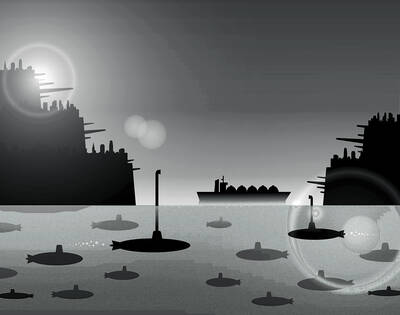
In the event of a war with China, Taiwan has some surprisingly tough defenses that could make it as difficult to tackle as a porcupine: A shoreline dotted with swamps, rocks and concrete barriers; conscription for all adult men; highways and airports that are built to double as hardened combat facilities. This porcupine has a soft underbelly, though, and the war in Iran is exposing it: energy. About 39,000 ships dock at Taiwan’s ports each year, more than the 30,000 that transit the Strait of Hormuz. About one-fifth of their inbound tonnage is coal, oil, refined fuels and liquefied natural gas (LNG),
On Monday, the day before Chinese Nationalist Party (KMT) Chairwoman Cheng Li-wun (鄭麗文) departed on her visit to China, the party released a promotional video titled “Only with peace can we ‘lie flat’” to highlight its desire to have peace across the Taiwan Strait. However, its use of the expression “lie flat” (tang ping, 躺平) drew sarcastic comments, with critics saying it sounded as if the party was “bowing down” to the Chinese Communist Party (CCP). Amid the controversy over the opposition parties blocking proposed defense budgets, Cheng departed for China after receiving an invitation from the CCP, with a meeting with
Chinese Nationalist Party (KMT) Chairwoman Cheng Li-wun (鄭麗文) is leading a delegation to China through Sunday. She is expected to meet with Chinese President Xi Jinping (習近平) in Beijing tomorrow. That date coincides with the anniversary of the signing of the Taiwan Relations Act (TRA), which marked a cornerstone of Taiwan-US relations. Staging their meeting on this date makes it clear that the Chinese Communist Party (CCP) intends to challenge the US and demonstrate its “authority” over Taiwan. Since the US severed official diplomatic relations with Taiwan in 1979, it has relied on the TRA as a legal basis for all
The two major opposition parties, the Chinese Nationalist Party (KMT) and the Taiwan People’s Party (TPP), jointly announced on Tuesday last week that former TPP lawmaker Chang Chi-kai (張啟楷) would be their joint candidate for Chiayi mayor, following polling conducted earlier this month. It is the first case of blue-white (KMT-TPP) cooperation in selecting a joint candidate under an agreement signed by their chairpersons last month. KMT and TPP supporters have blamed their 2024 presidential election loss on failing to decide on a joint candidate, which ended in a dramatic breakdown with participants pointing fingers, calling polls unfair, sobbing and walking


 RSS
RSS